Toilet Tank Leak vs. Toilet Bowl Backup: Categories, Cleanup & Prevention
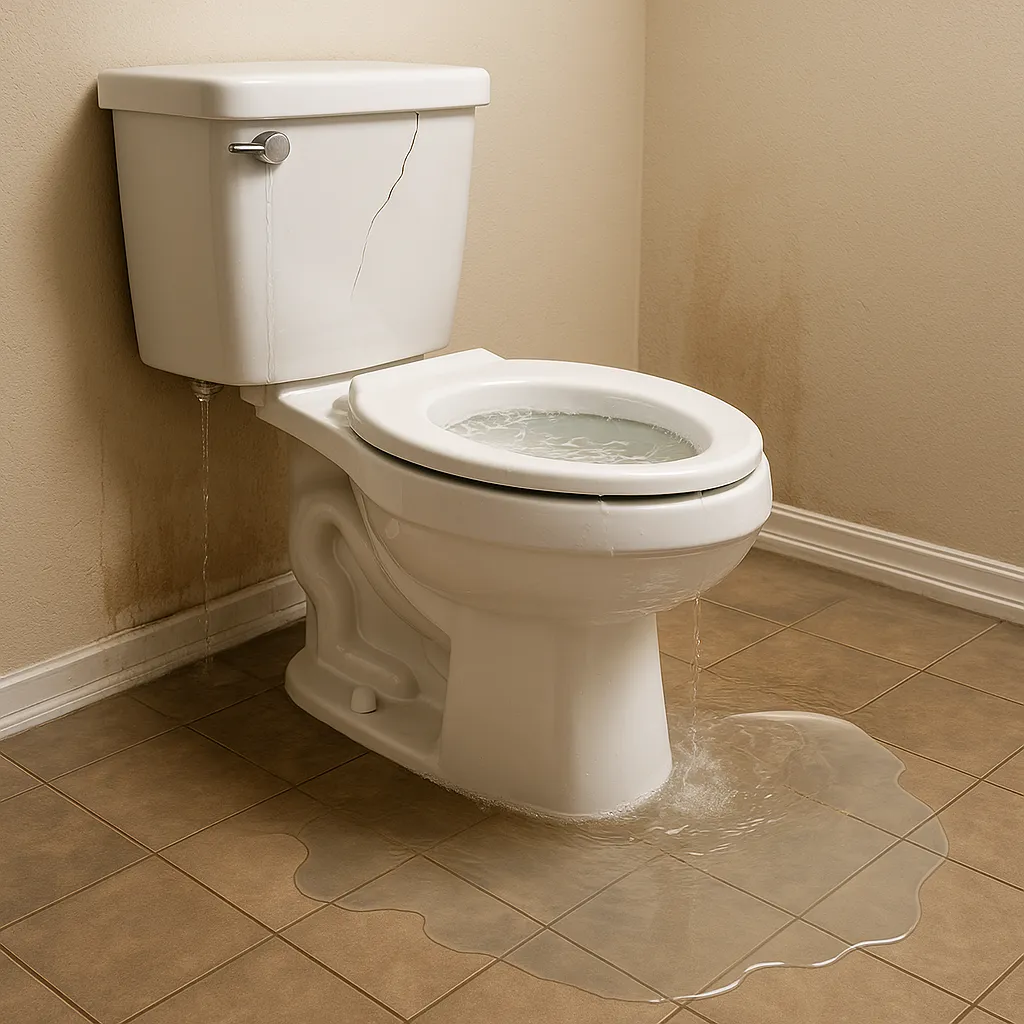
Two bathroom water events can look identical—water on the floor—but knowing the difference between a Toilet Tank Leak vs Toilet Bowl Backup is critical. A toilet tank leak is usually Category 1 (clean water), while a toilet bowl backup is always Category 3 (black water). This guide shows how to tell them apart, what to do first, and how to prevent damage room-by-room.
At Unified Restoration, we help Arizona homeowners mitigate and restore water damage fast. We don’t perform plumbing repairs, but we coordinate with trusted local partners and document everything for insurance—so you’re protected at every step.
- Tank leaks = Cat 1 (clean water) → safer if addressed quickly.
- Bowl backups = Cat 3 (sewage) → hazardous, professional cleanup required.
- Prevention works → follow our shut-off checklist before trips.
Toilet Tank Leak vs Toilet Bowl Backup: Key Differences
Water Damage Categories (Cat 1, Cat 2, Cat 3)
Restoration professionals classify water by contamination level. The category determines safety precautions, which materials must be removed, and how disinfection/drying is handled.
Category 1 — Clean Water
Water from a sanitary source: toilet tank, sink faucet, intact supply lines, refrigerator ice-maker line, or water heater cold inlet. It starts out clean, but if it sits long enough or wicks through contaminated materials, it can degrade.
Category 2 — Gray Water
Water with some contamination (e.g., dishwasher or washing machine discharge, bath/shower water). Cat 1 that has stagnated or contacted certain materials can become Cat 2. It may cause illness on exposure and often requires selective material removal.
Category 3 — Black Water
Sewage or heavily contaminated water: toilet bowl overflow with waste, drain/sewer backups, or long-standing stagnant water. Cat 3 requires strict PPE, controlled demolition of porous materials, and EPA-approved disinfection.
Read our full explanation of water damage categories: Water Damage Categories Explained
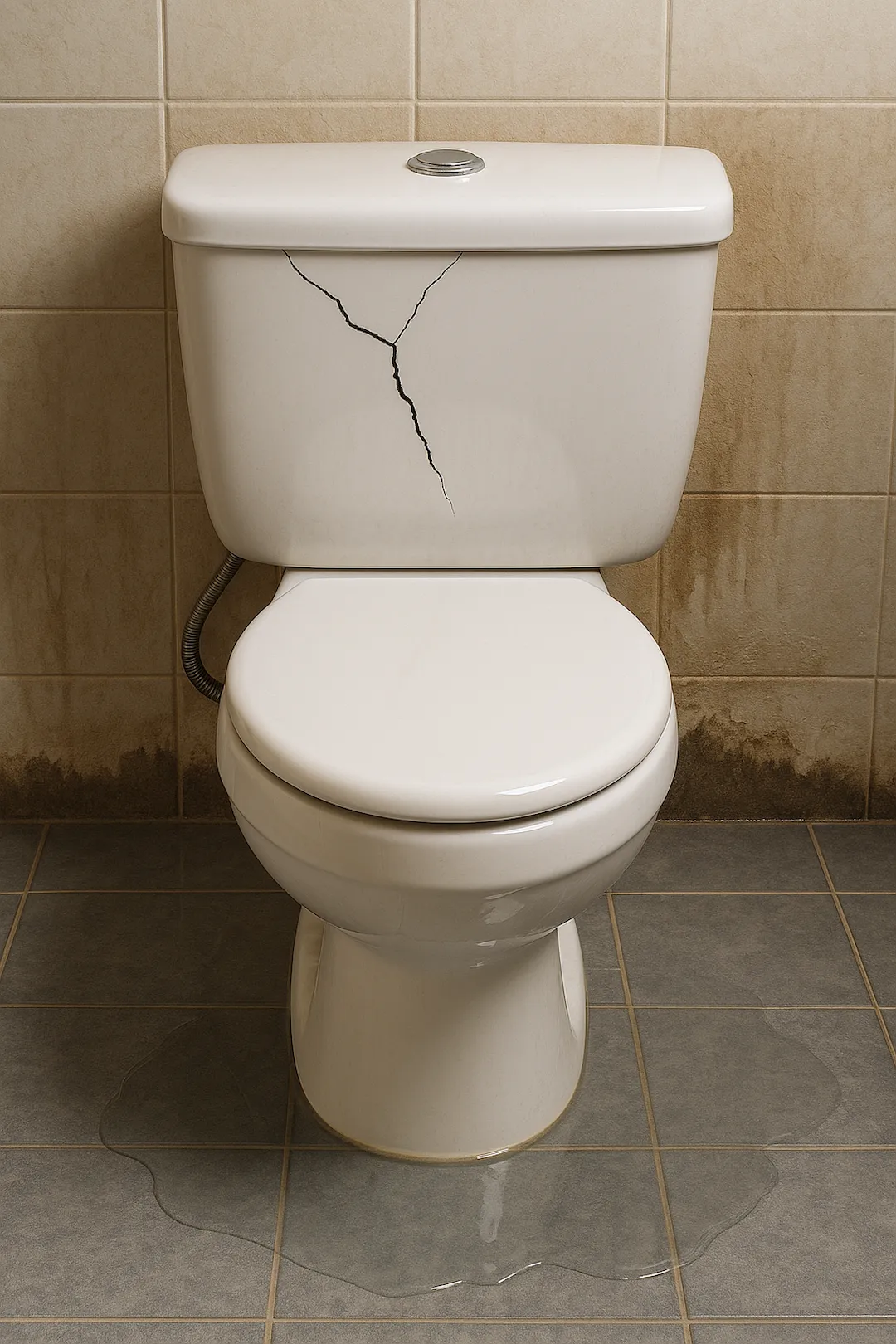
Toilet tank leaks begin as Category 1 (clean water). Quick action keeps them from degrading.
Scenario 1: Toilet Tank Leak (Category 1 – Clean Water)
When comparing a Toilet Tank Leak vs Toilet Bowl Backup, the tank is always Category 1 clean water. Leaks can come from a cracked tank, worn gasket, or fill valve failure.
What You’ll Notice
- Clear, odorless water pooling around the base or migrating into adjacent rooms.
- Running/hissing sounds or frequent tank refills.
- Damp baseboards, swelling laminate, cupping hardwood, or ceiling stains below.
Immediate Steps (Homeowner)
- Shut the toilet valve behind/under the tank (turn clockwise).
- Unplug nearby electronics and move items off the floor.
- Blot/remove standing water (gloves recommended) and avoid pushing moisture into other areas.
- Increase airflow with fans; open windows; set HVAC fan to “On.”
- Call a restoration pro if water ran for hours, reached walls or wood floors, or spread beyond the bathroom.
What Pros Do (Our Process)
- Moisture mapping (meters/IR) to find hidden pockets under floors and behind trim.
- Targeted drying with dehumidifiers and air movers; baseboard removal/checks if needed.
- Sanitizing touched surfaces; documentation/photos for insurance.
Degradation risk: After 24–48 hours—especially in Arizona heat—trapped Cat 1 water can shift toward Cat 2/3. Fast action = lower cost and safer outcome.
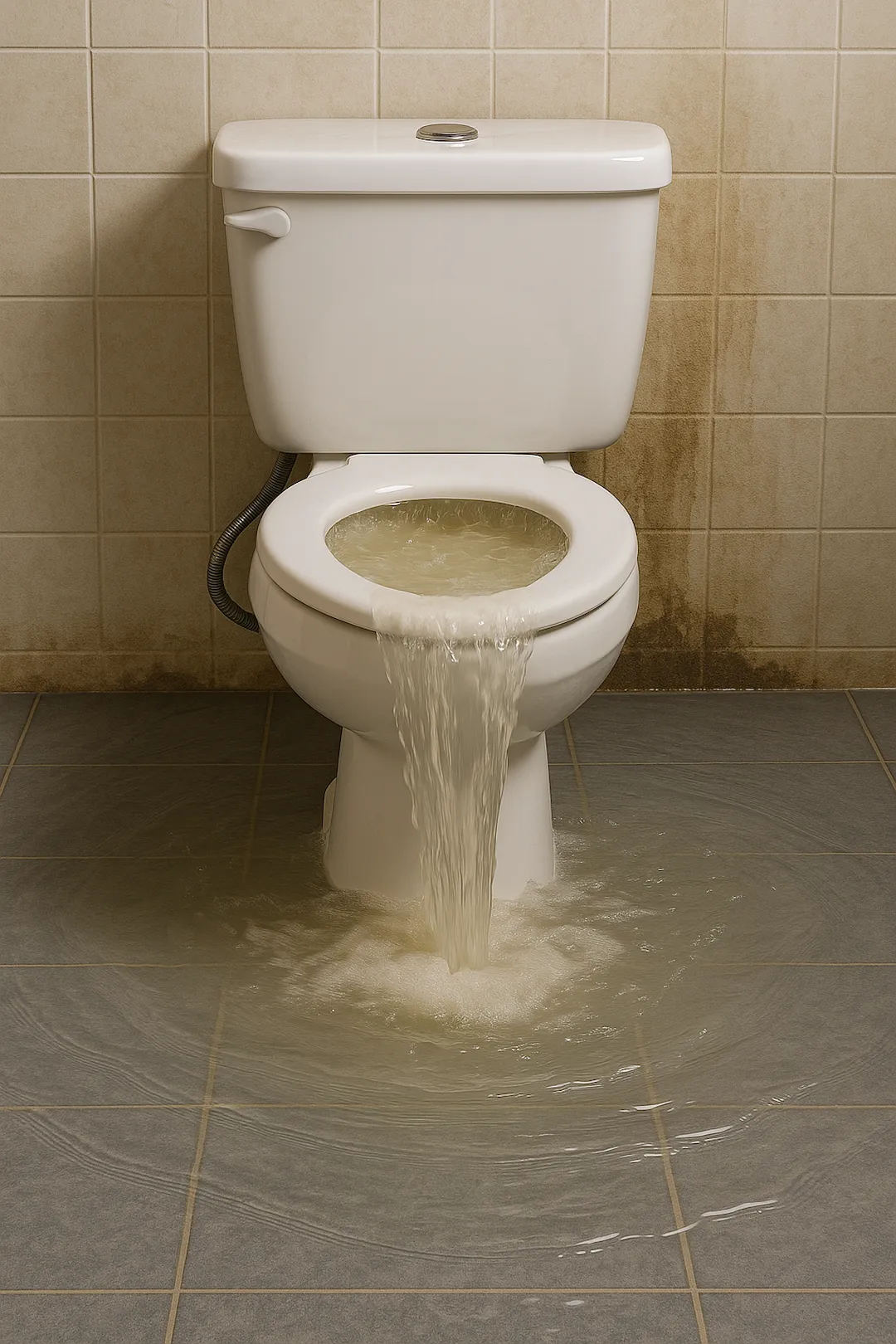
Bowl backups are Category 3 (black water) and require professional cleanup.
Scenario 2: Toilet Bowl Backup (Category 3 – Black Water)
In a Toilet Tank Leak vs Toilet Bowl Backup, the bowl backup is always Category 3 because sewage and drain water are highly contaminated and unsafe. Wastewater reverses through the plumbing and rises through the bowl—sometimes also through first-floor showers or floor drains—often triggered when other fixtures run (like laundry or a shower).
Common Causes
- Main sewer line clogs (grease, wipes, foreign objects).
- Tree root intrusion, offsets, or partial collapses in older lines.
- Heavy use against a restriction causing sudden reversal.
What You’ll Notice
- Odor, discoloration, or visible solids.
- Multiple slow/gurgling fixtures at once.
- Backup occurs even if that toilet wasn’t used; it worsens when other fixtures drain.
Immediate Steps (Homeowner)
- Keep everyone out of the affected area (including pets/kids).
- Stop water use across the home; if spread continues, shut off the main water to halt new inflows.
- Call a restoration company immediately and a licensed plumber to clear the line.
- Ventilate by opening windows if safe; close doors to contain the area.
What Pros Do (Our Process)
- Containment (barriers/negative air) to protect clean rooms.
- Extraction and source control (coordinate with the plumber).
- Controlled demolition of porous materials touched by Cat 3 water.
- EPA-approved disinfection; we use effective plant-based products.
- Drying and final verification with moisture readings + documentation.
Read about Tree Roots in Drain Pipe? Signs, Risks & What to Do Next : Tree Roots & Sewer Line Problems
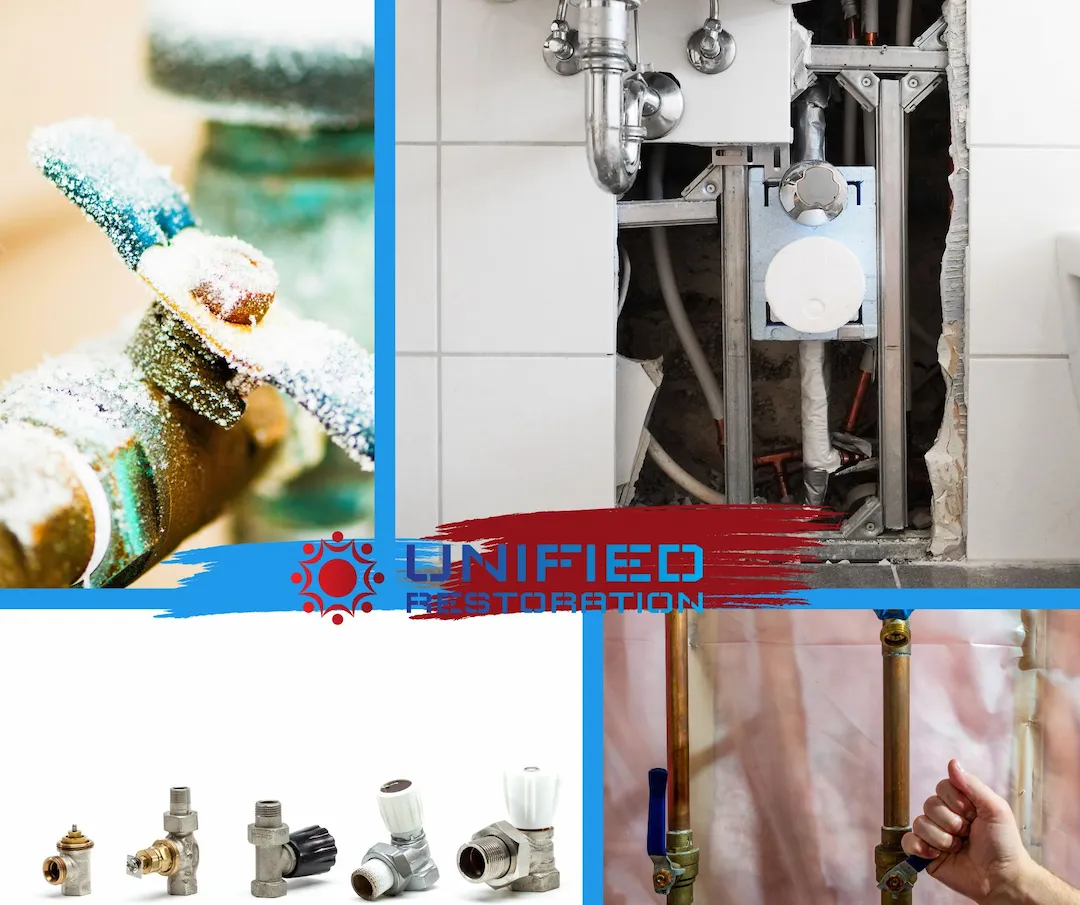
Label and test your shut-off valves. It’s the fastest path to prevention.
Preventing Water Damage (Room-by-Room Shut-Off Checklist)
Important: Always read manufacturer labels and follow standard safety guidelines before operating shut-off valves. If you are unsure how to safely locate or turn off a valve, contact a licensed plumber. Forcing or over-tightening shut-offs may cause damage.
Preventing water damage starts with knowing the risks of a Toilet Tank Leak vs Toilet Bowl Backup. Use this shut-off checklist before vacations for peace of mind.
Kitchen
- Sink: Turn off both hot and cold valves under the sink.
- Dishwasher: Close its dedicated shut-off (often near the sink).
- Refrigerator (ice/water): Close the small supply valve (behind fridge or under sink).
- Replace brittle/rubber hoses with braided stainless.
Bathrooms (each bathroom)
- Toilet: Close the valve behind/under the tank.
- Sinks: Turn off both hot and cold valves.
- Showers/tubs typically lack dedicated shut-offs; maintaining good caulking and grout reduces leak paths.
Laundry Room
- Washer: Turn off both hot and cold valves when away.
- Replace hoses every 5–7 years (braided stainless preferred).
- Utility sink: Close supply valves if present.
Garage / Utility Area
- Water heater (cold inlet): Close the incoming water valve for extended trips.
- Water softener/filtration: Follow manufacturer guidance; consider turning off supply while away.
Whole-Home
- Main water shut-off: Close the valve near the meter/curb stop or at the foundation.
- Smart protection: Flow-sensing auto shut-off plus leak detectors under sinks and behind toilets.
- Exercise valves quarterly and label them so the whole family knows what to do.
Note: Shutting off the main water prevents supply-side leaks, not sewage backups. Combine with good drain habits and periodic sewer line inspections—especially in older homes or treed lots.
Quick ID: Toilet Tank Leak vs Toilet Bowl Backup
Tank Leak (Cat 1)
- Clear, odorless water.
- Running/hissing tank; frequent refills.
- Spreads along floors/baseboards; no solids or sewage odor.
Bowl Backup (Cat 3)
- Odor, discoloration, possible solids present.
- Multiple fixtures slow/gurgle together.
- Worsens when other fixtures run (laundry, shower, sinks).
Health, Safety & Insurance
- Cat 3 is hazardous: keep kids, elderly, and pets away.
- PPE & containment are standard in professional Cat 3 cleanup.
- Mold timeline: growth can begin in 24–48 hours in the right conditions.
- Insurance: document cause and damage; mitigation first. We provide moisture logs, photos, and estimates for your claim.
Read our Tree Root In Drain Pipe Article →: Tree Roots & Sewer Line Problems
Need Help Now?
Whether you’re dealing with a Toilet Tank Leak vs Toilet Bowl Backup, Unified Restoration is available 24/7 to respond, clean, and restore your home. Even if you’re unsure which one you’re facing, give us a call — we’re happy to advise.
Frequently Asked Questions About Toilet Tank Leak vs Toilet Bowl Backup
A toilet tank leak is typically Category 1 (clean water), while a toilet bowl backup is Category 3 (sewage). The health risks, cleanup methods, and materials that must be removed are very different.
Yes—because the tank is filled by the clean water supply. However, if water sits, spreads into porous materials, or mixes with contaminants, it can degrade to Category 2 or 3.
Yes. Bowl backups involve sewage or contaminated drain water and must be handled as black water with proper PPE, containment, and EPA-approved disinfection.
Bleach alone isn’t a complete remediation plan and can create fumes. Category 3 cleanup requires trained pros, controlled demolition of porous materials, and approved disinfectants.
Yes. The main shut-off stops supply leaks, not drain problems. Combine shut-offs with good drain habits and periodic sewer line inspections.
Yes—especially together. Leak detectors give early alerts; auto shut-offs stop flow. They rely on Wi-Fi and monitoring, so use them as part of a layered prevention plan.