Tree Roots in Drain Pipes in Metro Phoenix: Signs, Risks & What to Do Next
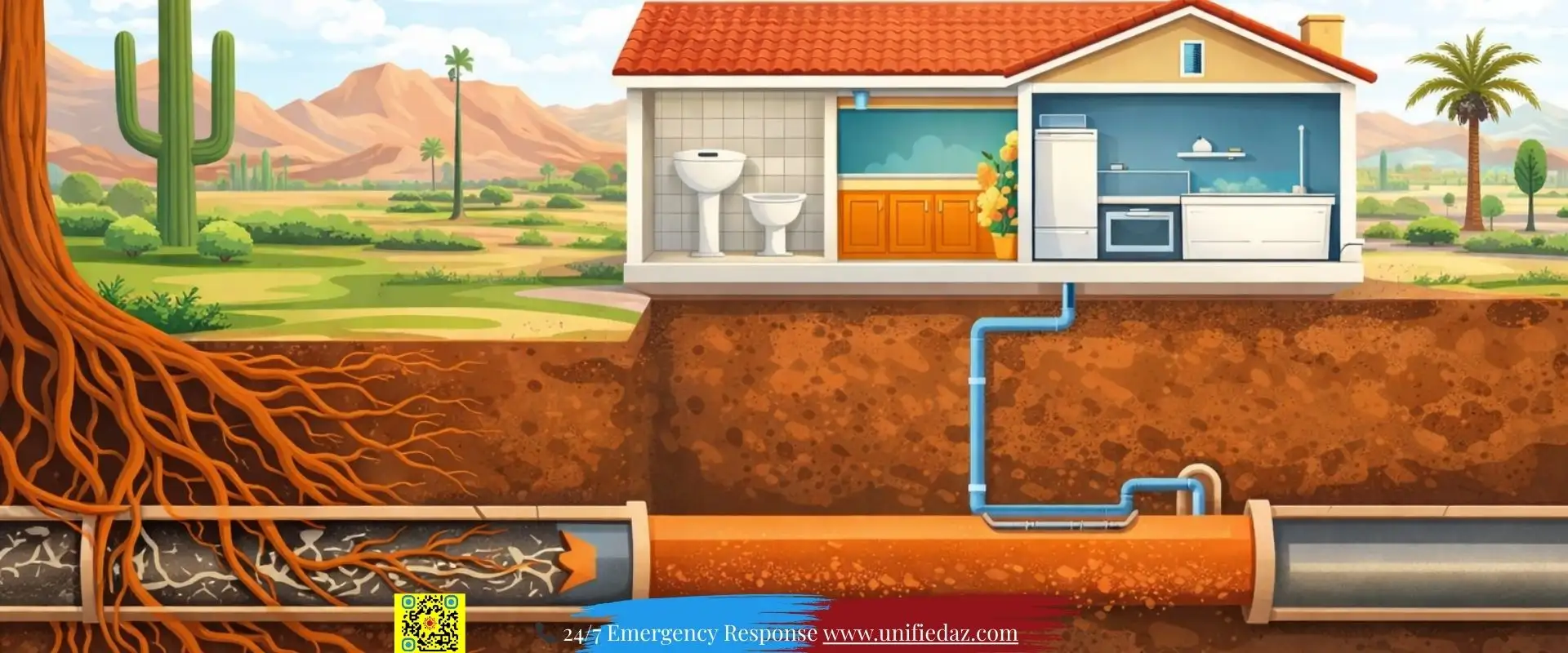
Tree root sewage line damage happens when roots grow toward your pipes underground — they’re simply searching for water and nutrients. When they find small cracks or broken joints, they squeeze in and start growing on the inside. Once inside, they have everything they need: constant moisture, unlimited nutrients, and plenty of space to spread. What starts as a thin root quickly becomes a thick mass that can completely block a pipe.
This can cause slow drains, backups, and eventually broken pipes. Tree roots in drain pipes are one of the most common causes of serious drain and sewer problems for homeowners. If you notice slow drains or gurgling toilets, tree roots might be the culprit. Fixing this problem quickly can save you from expensive repairs — and from sewage backing up throughout your home from bathroom and kitchen drains.
Common Signs of Tree Roots in Drain Pipe
- Slow draining sinks and tubs — water takes noticeably longer to empty than usual
- Gurgling toilets — air trapped by a partial blockage causes bubbling sounds
- Multiple clogged or backed-up drains — when more than one fixture backs up at once, it’s rarely just a simple clog
- Sewage backups — Emergency. Call us at (480) 485-9060 if you need a plumber in your area.
- Sinkholes in yard — depressions in your lawn where soil has washed away along the pipe path. Emergency. Call us immediately.
- Lush patches of grass — unusually green or fast-growing areas over your sewer line mean roots are feeding on leaking nutrients underground
- Sewage odors — foul smells from drains or your yard indicate a serious blockage or pipe break
Tree roots may be out of sight — but they won’t stay that way for long.
How Tree Roots Get Into Drain Pipes
Tree roots are always searching for water and nutrients — more than you already provide through regular watering. Your drain pipe is like hitting the jackpot. An all-you-can-eat buffet for a hungry tree. Here’s how they find their way in:
Finding Small Openings
Tree roots are incredibly resilient. They can detect moisture from the smallest crack in your drain line. Roots are naturally drawn to water sources and are thin enough to squeeze through openings you’d never notice, including:
- A small pinhole leak in your drain line
- A loose joint between pipe sections
- Old, disintegrating pipes
- Pipes that have shifted over time as the house settles
Once they find any of these openings, they push their way in and make a home with unlimited nutrients and moisture on tap.
Once Inside Your Pipes
After a root makes its way inside, it finds perfect growing conditions. Your drain pipe provides constant moisture and almost unlimited nutrients. This creates an environment for extremely fast growth. Once a small root enters, it quickly grows thicker and branches out. Soon, what started as a thin root becomes a thick mass that can completely block the pipe.
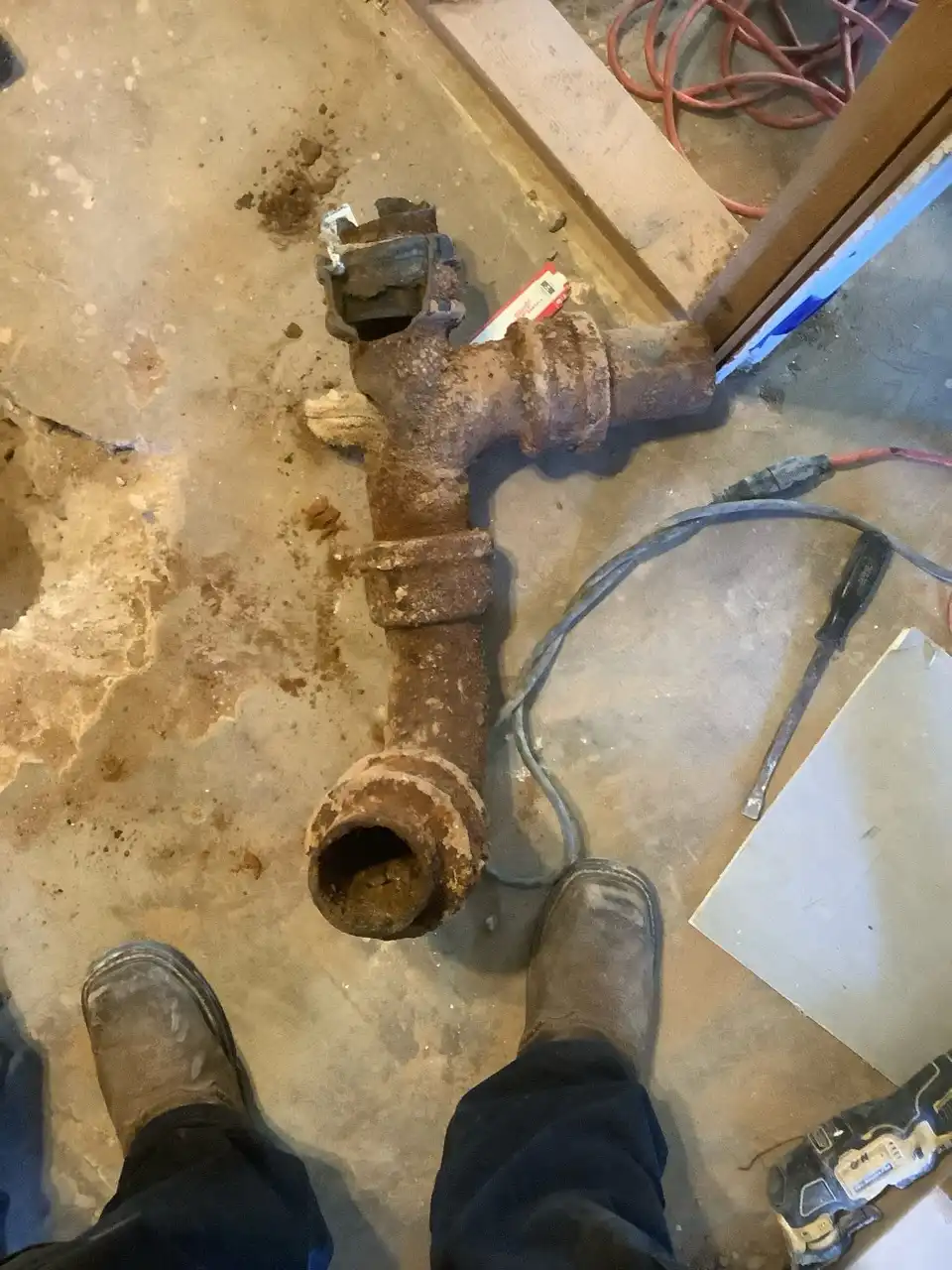
This image, provided by Trident Plumbing and Drain in Phoenix, shows a severely damaged drain pipe affected by tree root intrusion.
Types of Pipes Most at Risk
Not all pipes are equally vulnerable to tree roots in drain pipes. The most at-risk include:
- Clay pipes — older pipes with many joints that crack easily
- Concrete pipes — develop cracks as they age and shift
- Cast iron pipes — corrode over time, creating openings
Modern PVC pipes are more resistant because they have fewer joints and don’t crack as easily. However, even PVC can be invaded if joints aren’t properly sealed or if the pipe is damaged during installation or ground movement.
Which Trees Are Most Likely to Damage Pipes?
Not all trees carry the same risk. Some have aggressive root systems that actively seek out water sources. These are the most likely culprits when it comes to pipe damage:
- Willow trees — their roots can travel up to 100 feet seeking water
- Poplar trees — fast-growing with extensive root systems
- Silver maple trees — known for surface roots that spread widely
- Sycamore trees — develop massive root systems that can crush pipes
- Birch trees — aggressively seek moisture
If you have any of these trees within 50 feet of your sewer line, be extra vigilant about checking for root intrusion — especially in older homes with clay or cast iron pipes.
How Plumbers Diagnose Tree Root Problems
If you suspect tree roots in drain pipe, a camera inspection is the most reliable way to confirm its a root intrusion. A licensed plumber will use professional-grade diagnostic tools including:
- Camera inspection — a small camera on a flexible cable fed through your pipes to visually identify roots, cracks, and blockages
- Electronic leak detectors — listen for the sound of pressurized water escaping
- Hydro jetting — high-pressure water that can detect and clear blockages
- Drain snake with root cutter — a special attachment that can feel resistance from roots and cut through them
These methods provide definitive proof of root problems and help determine the best solution. Unified Restoration can help connect you with trusted local plumbers in the Phoenix area and coordinate the water damage restoration work once the line is repaired.
DIY vs. Professional Root Removal
When dealing with tree roots in drain pipes, you want to be very careful not to make a big problem even bigger. While hardware stores sell root-killing chemicals and drain augers, these are temporary fixes at best. The risk of making things worse — or exposing yourself and your family to sewage and hazardous materials — is not worth saving a few hundred dollars.
Professional root removal services range from a few hundred to several thousand dollars depending on the extent of the damage. While professional services cost more upfront, they properly address the root cause (literally) and prevent further damage — which saves significantly more in the long run.
Always call a licensed plumber first. Once the line is repaired, call Unified Restoration to handle the water damage. We coordinate with your plumber and your insurance so you only have to make one call.
Water Damage from Tree Roots: What to Expect
Water damage caused by tree roots in drain pipes is classified as Category 3 — Sewage Water Damage. This is the most serious category and can be very destructive and costly. While some situations are covered under your homeowner’s insurance policy, coverage varies widely. Check your policy, call your agent, or contact us for an honest inspection and guidance before it gets worse.
We’ve seen water damage start from a single tub or shower drain and spread to entire homes when an underground sewage line backs up. If the line can be repaired, costs are manageable. If the line needs replacing — especially when it requires breaking concrete to access — costs and disruption can escalate very quickly.

Severe water damage to flooring and bathroom from clogged drain pipe due to tree root intrusion
Learn more: Understanding the Categories of Water Damage
Hidden Hazards: Why DIY Cleanup Is Dangerous
Water damage in older homes carries risks beyond what you can see. Materials used before 1980 may contain asbestos, and paint applied before 1978 may contain lead. Unified Restoration can quickly identify these hazards and develop a safe, effective remediation plan for your family. DIY cleanup in these situations can expose you and your loved ones to serious carcinogenic hazardous materials.
- Asbestos — common in older floor tiles, pipe insulation, and ceiling materials. Disturbing it without proper containment is extremely dangerous. Read our article What Is Asbestos? →
- Lead paint — found in homes built before 1978. Water damage can cause paint to chip and flake, releasing lead dust. Read our article What Is Lead Paint? →
- Mold — can begin growing within 24–48 hours of water exposure. Sewage-fed mold is especially hazardous. Read our mold guide →
Your Personal Belongings and Furniture
A large sewage backup can affect your personal belongings and furniture throughout the home. We handle everything in a professional manner — whether items need to be cleaned or safely disposed of. Our professional content cleaning and storage partners handle everything with care, and once your home is fully restored, they bring everything back and place it exactly where it was.
Navigating Your Insurance Claim
In some cases, insurance coverage is essential — especially when the project is large and involves hazardous materials like asbestos or lead. Unified Restoration will guide you through the entire claims process. We provide all necessary photos, moisture logs, documentation, and direct communication with your insurance agent or adjuster to make the whole process as smooth as possible.
Don’t wait until the damage is worse to call your insurance company. The sooner you document and report, the better your outcome.
Proactive Steps to Protect Your Home
The best time to deal with tree root problems is before they become an emergency. Here are proactive steps every Arizona homeowner should take:
- Know where your sewer line runs — your local municipality or a plumber can help you locate it
- Plant trees at a safe distance — keep aggressive trees at least 50 feet from sewer lines; choose slow-growing species near pipes
- Schedule camera inspections — especially if your home is over 20 years old or you have large trees in your yard. Every 2–3 years is reasonable
- Use copper sulfate treatments — a licensed plumber can apply root-inhibiting treatments that slow root growth in pipes without killing your trees
- Watch your water bill — an unexplained spike often means water is escaping somewhere underground
- Install a backwater valve — this prevents sewage from flowing back into your home during a sewer backup event
- Know where your main shutoff is — in a sewage backup emergency, stopping water use immediately reduces how far damage spreads
When to Call Unified Restoration
If you’re noticing slow drains, sewage smells, or water damage in your home, don’t wait for the problem to get worse. Tree root intrusion often leads to hidden pipe damage that can quickly turn into a major restoration issue.
Call Unified Restoration first. We’ll evaluate the situation, help coordinate with a trusted local plumber if needed, and take immediate steps to prevent further damage to your home.
Our team handles the cleanup, drying, and restoration — so you don’t have to manage multiple contractors or guess what to do next.
Call us 24/7 at (480) 485-9060 or request a free inspection online. We’ll respond fast, give you an honest assessment, and guide you every step of the way.