
What Is Asbestos? A Homeowner’s Guide to Risks, Testing & Safe Restoration
If your home was built before 1980, there’s a real chance asbestos is present somewhere in the structure. In the Phoenix Metro area, cities like Mesa, Phoenix, Glendale, Chandler, Gilbert, Buckeye, Tempe, Scottsdale, and Peoria all have established neighborhoods with homes built during the postwar building boom of the 1950s, 60s, and 70s. Those older parts of town — the ones with mature trees, larger lots, and character — are exactly where asbestos-containing materials are most likely to be found. Many homeowners in these areas have no idea until water damage, a renovation, or a restoration project uncovers them.
This guide explains what is asbestos, where it hides in your home, what it does to your health, and exactly how Unified Restoration protects you and your family when it’s found.
What Is Asbestos?
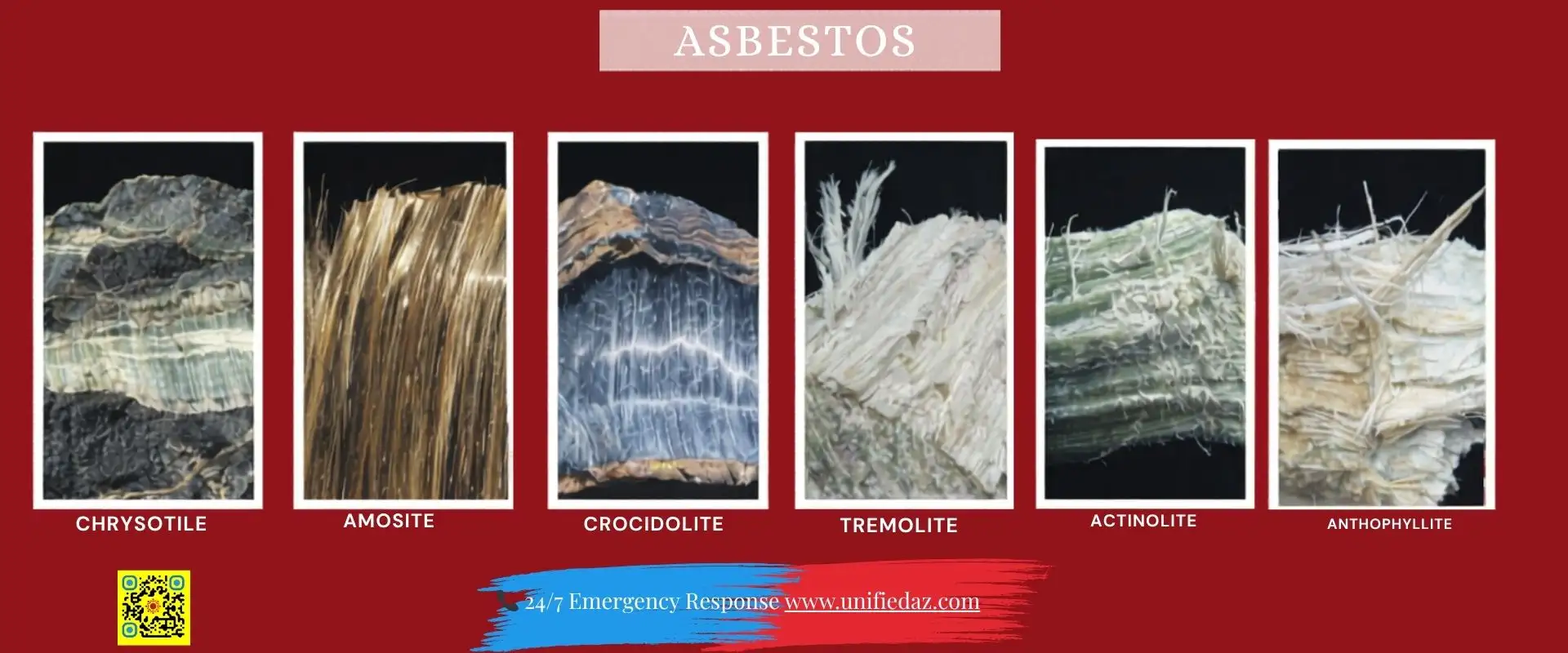
So what is asbestos exactly? It is a naturally occurring mineral fiber found in rock and soil. The name is given to six minerals that occur naturally in the environment as bundles of fibers that can be separated into thin, durable threads for use in commercial and industrial applications. These fibers are resistant to heat, fire, and chemicals and do not conduct electricity. For these reasons, asbestos was used widely across many industries for decades.
The six types of asbestos are chrysotile (white asbestos), amosite (brown asbestos), crocidolite (blue asbestos), tremolite, anthophyllite, and actinolite. All of these types are known to cause serious health issues, including cancer.
Fact: All forms of asbestos, including chrysotile, are carcinogenic to humans. There is no safe level of exposure. Learn more at the World Health Organization.
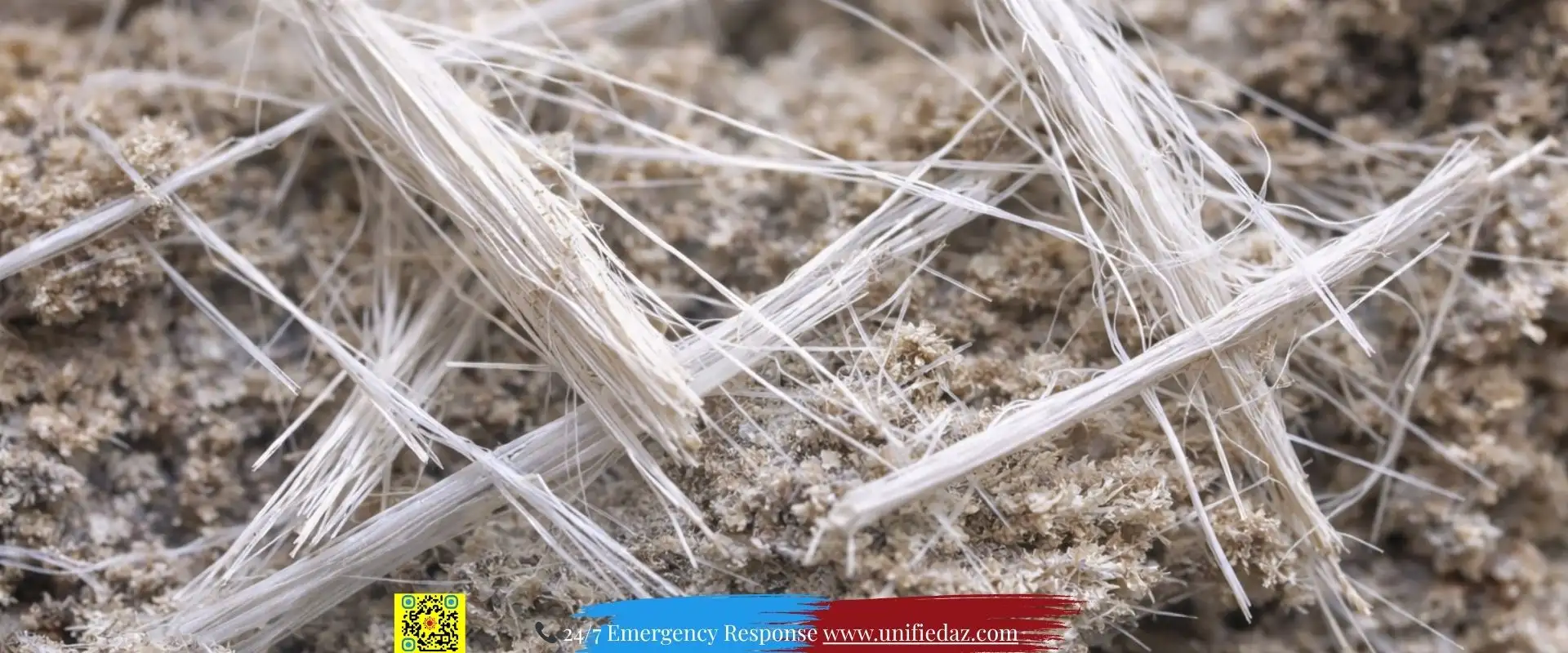
Close-up image of asbestos fibers showing thin needle-like strands under magnification.
Where Can I Find Asbestos?
Because of its fiber strength and heat resistance, asbestos was used in a wide variety of building construction materials for insulation and as a fire retardant. It was also used in a wide range of manufactured goods — mostly building materials, friction products, and heat-resistant fabrics.
Common places asbestos may be found in your home:
- Attic and wall insulation containing vermiculite
- Vinyl floor tiles and the backing on vinyl sheet flooring — the adhesive (mastic) underneath is often black and very likely to contain asbestos
- Roofing and siding shingles
- Textured paint and patching compounds used on walls and ceilings
- Walls and floors around wood-burning stoves protected with asbestos paper, millboard, or cement sheets
- Hot water and steam pipes coated with asbestos material or covered with an asbestos blanket or tape
- Oil and coal furnaces and door gaskets with asbestos insulation
- Heat-resistant fabrics
- Automobile clutches and brakes
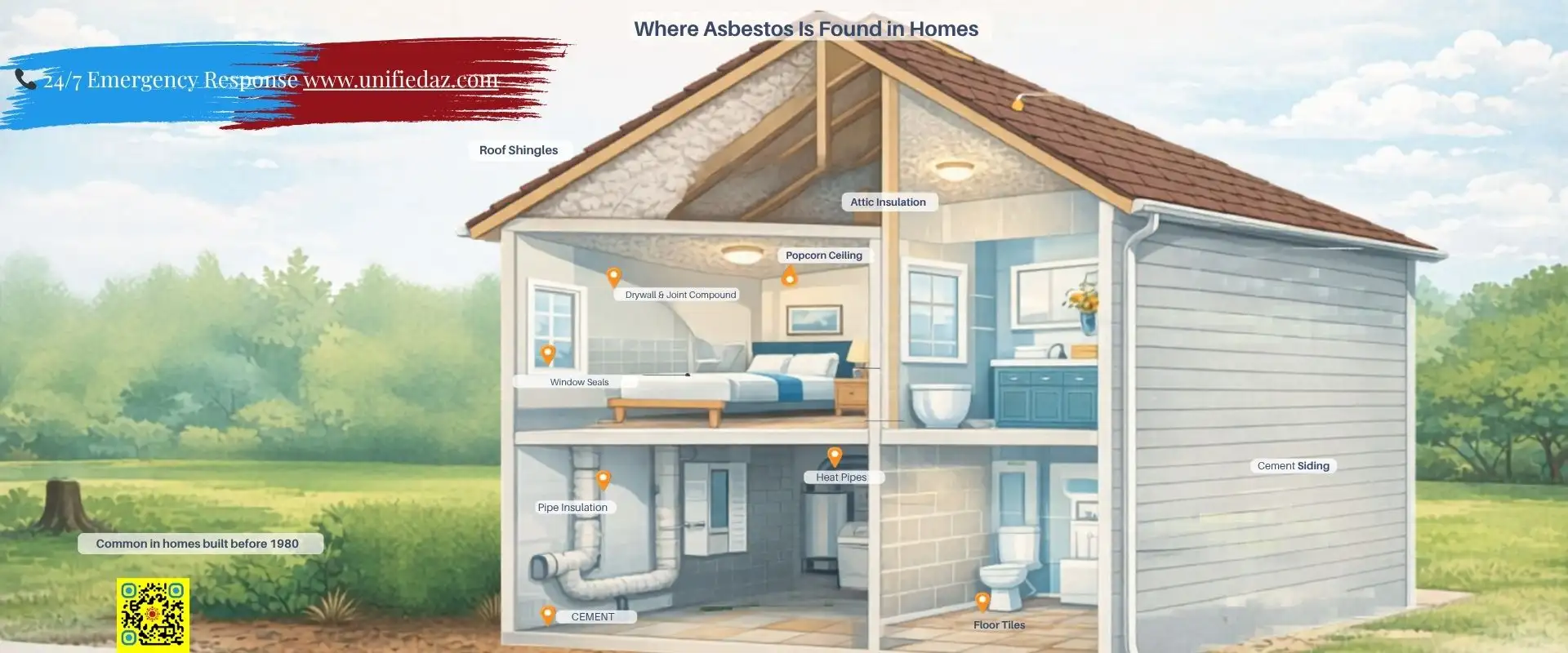
Diagram showing common locations of asbestos in a home including attic insulation, drywall, floor tiles, pipe insulation, and cement siding.
Do I Need an Asbestos Test Before Restoration?
Many homeowners don’t know what is asbestos until a restoration project uncovers it. If your home was built before 1980, an asbestos test is required by federal, state, and local law before any demolition or material removal begins. At Unified Restoration, we arrange third-party independent testing before we touch a single tile or wall. We receive the lab results and walk you through exactly what they mean — in plain language, not industry jargon.
- Federal EPA Asbestos Guidelines
- Arizona DEQ Asbestos Requirements
- Maricopa County Asbestos Regulations
When Does Asbestos Become a Risk During Restoration?
Asbestos becomes a serious concern the moment water damage requires demolition. Cutting, sanding, or removing materials that contain asbestos — like floor tiles, drywall compound, or pipe insulation — releases fibers into the air. This is why calling a restoration company before starting any DIY cleanup is critical. What looks like a simple flood cleanup or mold job can quickly become a hazardous materials situation in homes built before 1980.
Important: Asbestos that is in good condition and left undisturbed is generally not an immediate health risk. The danger comes when it is disturbed, damaged, or removed improperly — releasing microscopic fibers into the air you breathe.
What NOT to Do If You Suspect Asbestos
This is just as important as knowing what is asbestos and where it hides. Many homeowners unknowingly make the situation worse before calling a professional. Here’s what to avoid:
- Do not sweep, vacuum, or dust — this disturbs fibers and sends them airborne where they can be inhaled
- Do not sand, scrape, or drill into any material you suspect contains asbestos
- Do not use power tools on older flooring, ceiling tiles, or insulation without testing first
- Do not attempt to remove it yourself — even with a mask. Standard dust masks do not filter asbestos fibers
- Do not leave it exposed — if materials are already damaged, contain the area and keep people out until tested
- Do not assume it’s safe because it looks intact — materials that appear undamaged can still release fibers when disturbed
- Do not ignore it — undisturbed asbestos in good condition can be left in place, but it must be monitored and managed professionally
Standard dust masks do not protect against asbestos. Only an N100 respirator or a full-face air-purifying respirator with P100 filters provides protection — and even those require proper fit testing to be effective.
Health Effects From Exposure to Asbestos
Please Note: Unified Restoration is a restoration company, not a medical provider. The information below is for general awareness only and is sourced from the EPA, WHO, and National Cancer Institute. If you believe you have been exposed to asbestos or are experiencing health symptoms, please consult your doctor or a qualified healthcare provider immediately.
Exposure to asbestos increases your risk of developing lung disease. If you smoke, that risk increases tenfold. Repeated exposure to asbestos carries a significantly greater chance of developing very harmful health effects. Disease symptoms may take many years — sometimes decades — to develop following exposure.
Healthcare providers identify the possibility of asbestos exposure through a thorough medical and work history. After a doctor suspects an asbestos-related condition, they can use a full physical examination, chest X-ray, and pulmonary function tests to make a diagnosis. Your doctor may also refer you to a specialist who treats diseases caused by asbestos.
The three major health effects associated with asbestos exposure are:
- Lung cancer — one of the most common and deadly outcomes of asbestos exposure
- Mesothelioma — a rare but aggressive form of cancer found in the thin lining of the lung, chest, abdomen, and heart
- Asbestosis — a serious, progressive, long-term non-cancer disease of the lungs that causes scarring of lung tissue
For more detailed health information, visit the National Cancer Institute Asbestos Fact Sheet. If you have any health concerns related to asbestos exposure, please speak with your doctor — we can help with the restoration side, but your health always comes first.
How Unified Restoration Protects You From Exposure
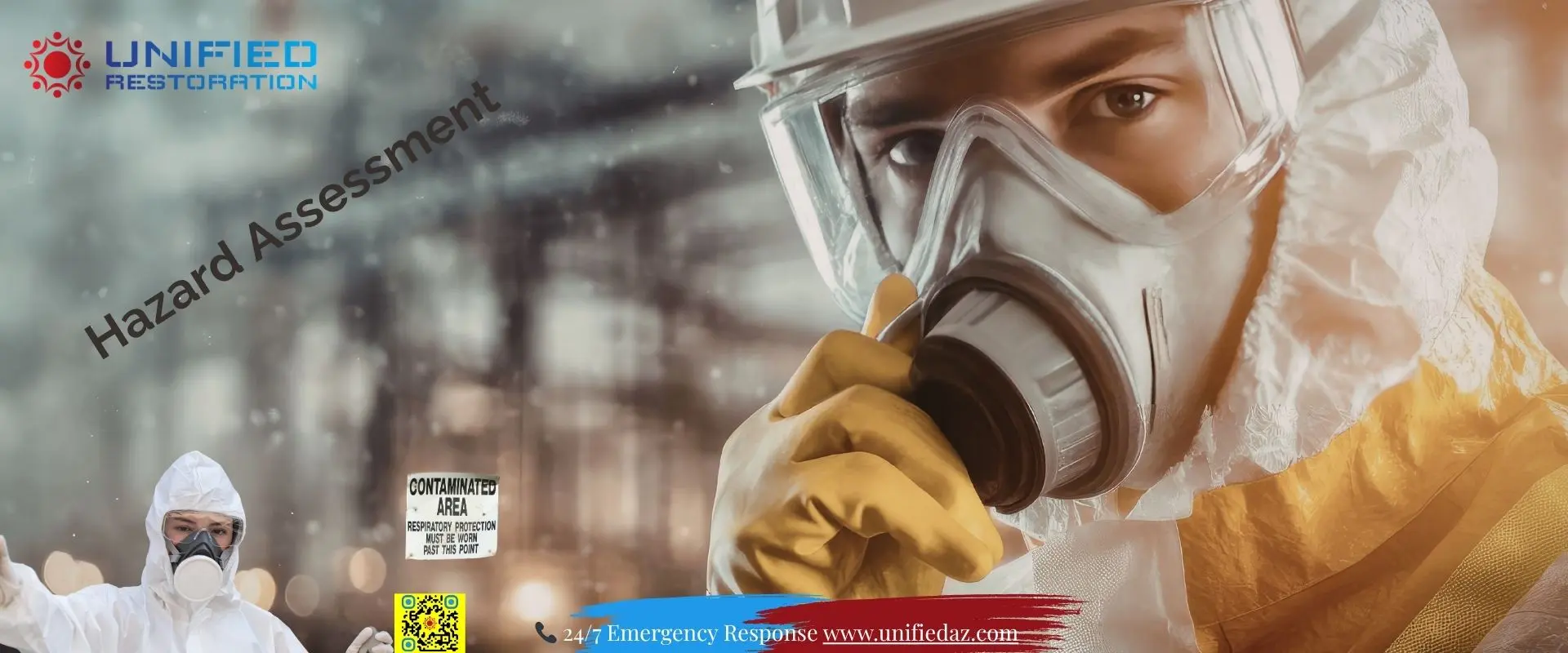
Understanding what is asbestos is the first step — letting us handle it safely is the second. At Unified Restoration, we take our work seriously and protect you from exposure to hazardous materials from day one. Here’s exactly what our process looks like:
- Step 1 — Property Assessment: We check the age and construction history of your home or property before any work begins.
- Step 2 — Third-Party Testing: We promptly arrange an independent third-party bulk asbestos sampling and analysis to determine if any asbestos is present in the materials we plan to disturb. That is our first line of defense in protecting your family’s health.
- Step 3 — Certified Abatement: When asbestos is confirmed, we call in our EPA-certified supervisors and workers holding active certifications as Asbestos Inspector, Asbestos Contractor/Supervisor, and Asbestos Management Planner. All work follows strict EPA guidelines using HEPA filtration systems and full building containment to isolate the work area from the rest of your home.
- Step 4 — Clearance Testing: Once the work is completed, we call a third-party independent environmental testing company to perform what is called a clearance test — confirming whether the area is safe to open before we remove any containment barriers.
- Step 5 — Lab Analysis & Sign-Off: Only after we receive third-party laboratory analysis showing the area is clear do we remove the barriers and move forward with the next phase of your project.
With over 24 years of experience in the restoration and construction industry, and active EPA certifications as Asbestos Inspector, Asbestos Contractor/Supervisor, and Asbestos Management Planner, we know the ins and outs of keeping our employees and our customers safe from hazardous material exposure. We don’t take this lightly — and we explain everything in plain language you can understand, like a friend, not just industry jargon.
Don’t just take our word for it — read our reviews from homeowners across the Phoenix area who trusted us to handle their homes safely and honestly.
Now You Know What Is Asbestos — There’s Only One Thing Left to Do
Now you know what is asbestos, where it hides, what it does to your health, and exactly how we protect you and your family every step of the way. There’s only one thing left to do — call us.
Whether you’re dealing with water damage, planning a renovation, or just want peace of mind about your older home, Unified Restoration is here to help. We’ll give you an honest assessment, arrange the right testing, and handle everything safely from start to finish.