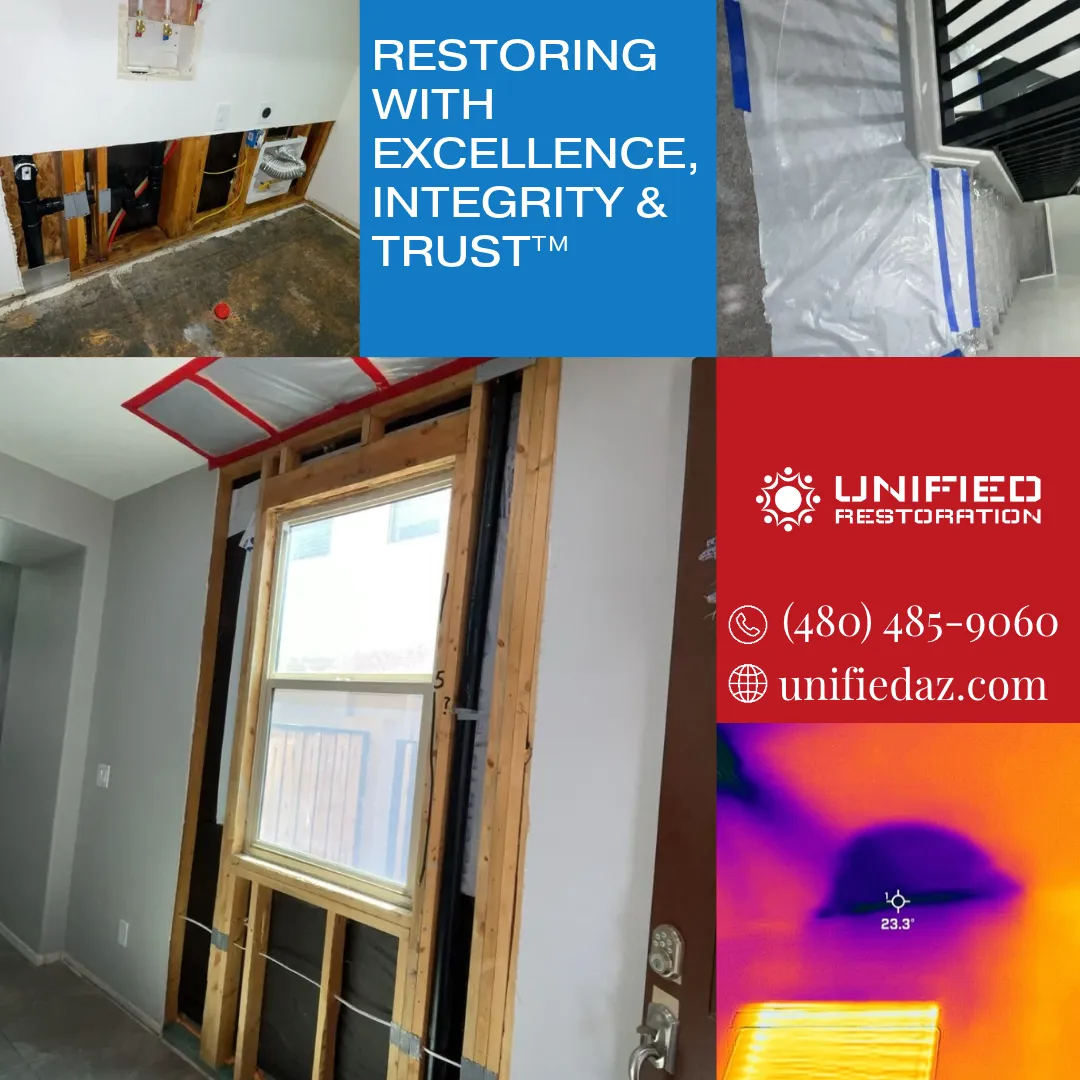
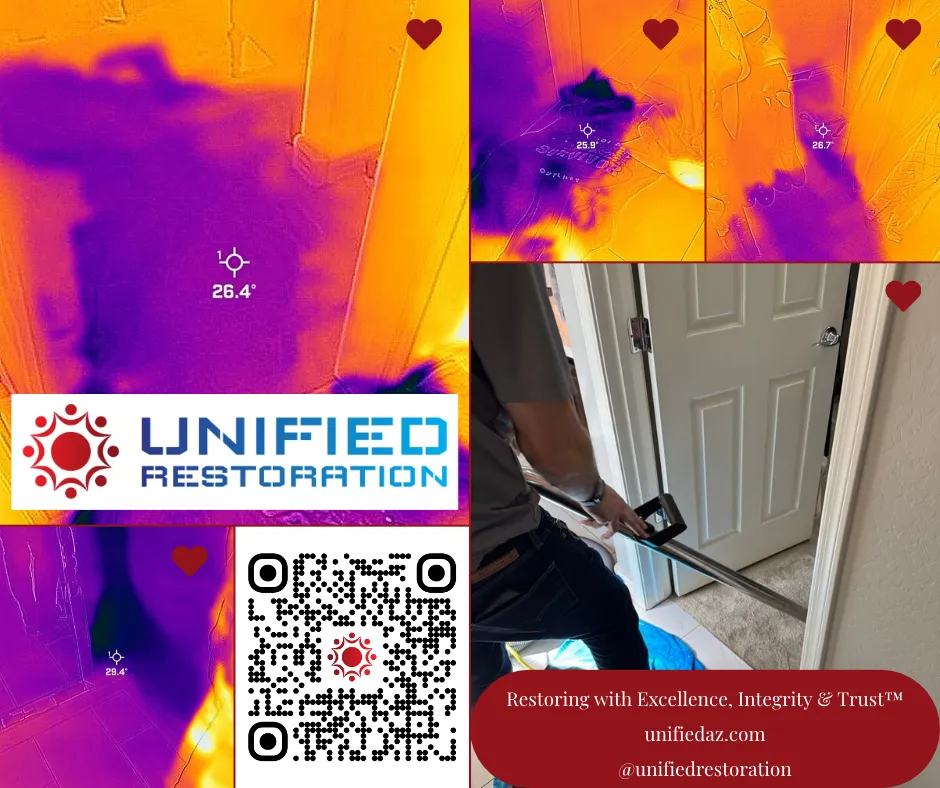
A PEX pipe leak in a Peoria home sent water into four parts of the house at once: the garage, the hallway bathroom, the primary bathroom and the primary closet. Everywhere it reached was wet from the ceiling down to the floor. The primary closet had standing water, and the large double-sink vanity in the primary bathroom was badly damaged.
The leak came from the main PEX line, at a bend where the pipe should have made a proper 90-degree turn. Before we touched anything, we did a full thermal and moisture inspection to find every wet area, including the ones you can’t see.
- Cause
- Leak at a bend in the main PEX water line
- Areas affected
- Garage, hallway bathroom, primary bathroom, primary closet
- Drying time
- 3 to 4 days, depending on the area
- Insurance
- Homeowner chose to file a claim
What we did
- Ran a full thermal and moisture inspection of every affected area
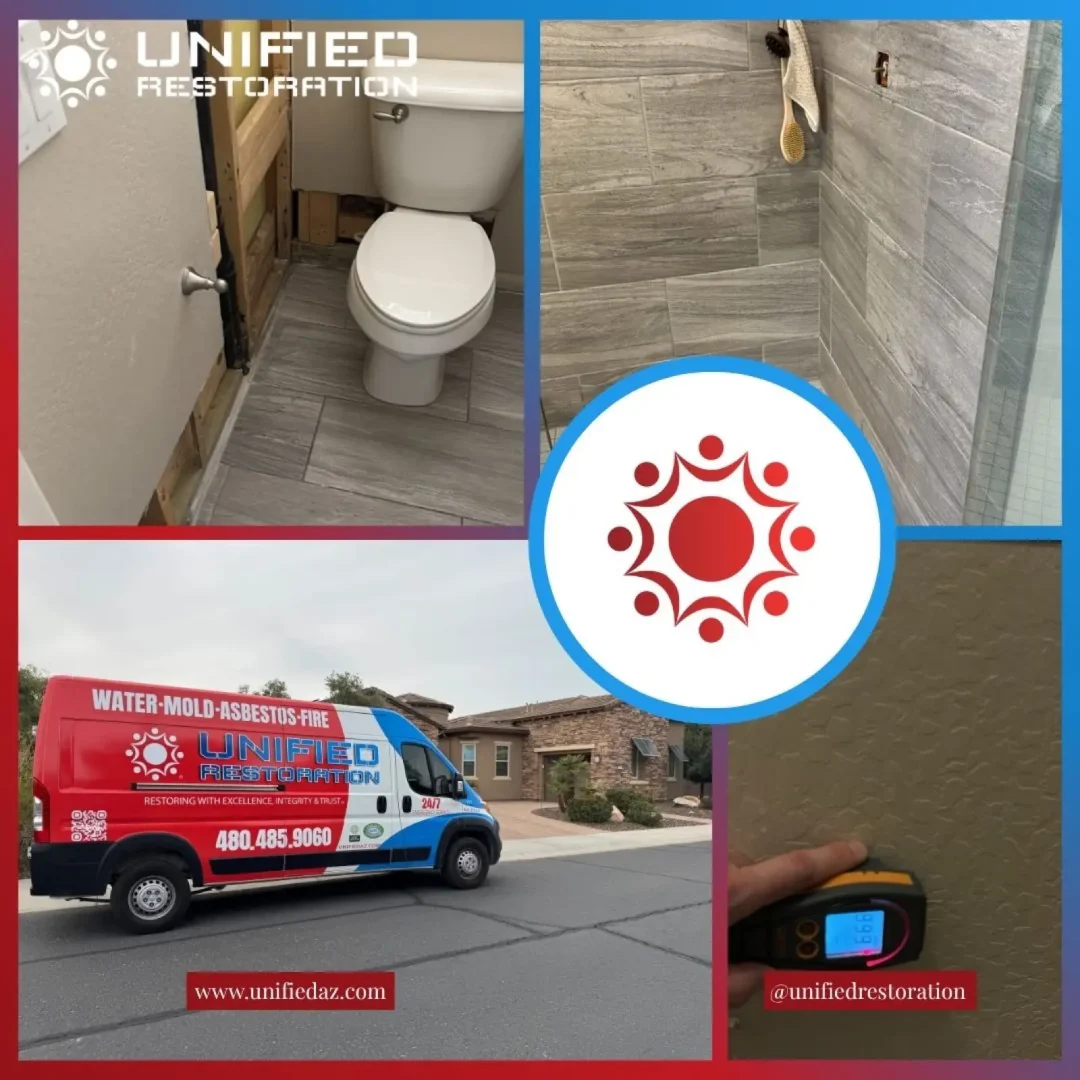
- Removed drywall floor to ceiling in both bathrooms, only where it was wet
- Removed the water-damaged double-sink vanity in the primary bathroom
- Extracted standing water from the primary closet and pulled the carpet pad
- Removed all the affected baseboards
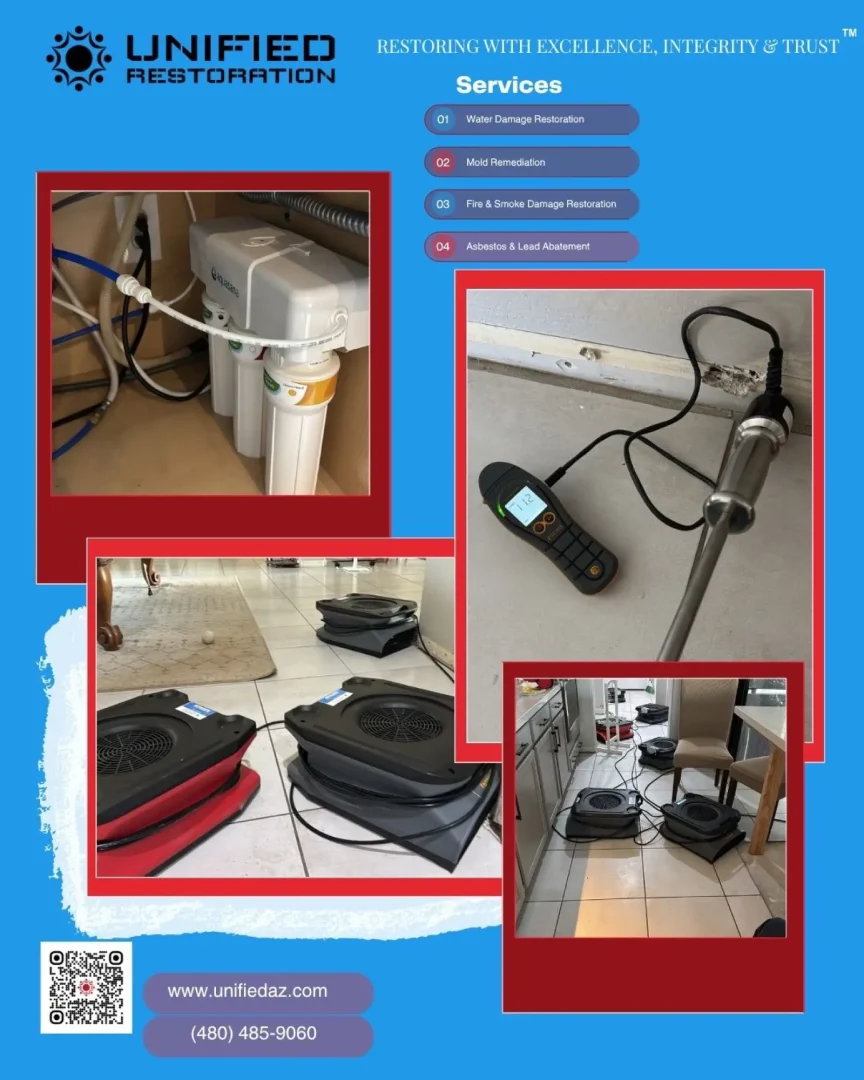
- Set up drying equipment and dried the structure in 3 to 4 days
How one PEX pipe leak reached four rooms
PEX is flexible, and that’s one of the reasons it’s so common in Arizona homes. But it has limits. When a line is bent too tightly instead of making a proper 90-degree turn, that spot is under constant stress. Over time, it can start to leak.
This one was on the main line, so the water had plenty of pressure behind it. It ran through the walls and spread to the garage, both bathrooms and the primary closet. By the time it showed, the water had gone from the ceiling to the floor in every one of those areas.
Finding the hidden water first
With a leak this spread out, guessing isn’t good enough. Our thermal camera shows the cooler areas where water is sitting inside walls and under floors, and our moisture meters confirm what the camera shows. Together, they told us exactly how far the water had traveled in each room.
That map decided what came out and what stayed. In both bathrooms, we removed drywall from floor to ceiling, but only in the affected areas. We didn’t open up dry walls just to be safe.
What had to come out
The primary bathroom’s long double-sink vanity was already badly damaged by the water, so it had to be removed. Cabinets like this are made of materials that swell and fall apart once they soak up water, and they can’t be dried back to good condition.
In the primary closet, we extracted the standing water and pulled the carpet pad from underneath. Wet pad holds water against the floor and won’t dry in place. We also removed all the affected baseboards. Then we set up drying equipment across the house. Some areas were dry in three days, and the rest took four.
No pressure, just options
After the inspection, we sat down with the homeowner and walked her through what we found and what her options were. Because the damage was extensive, she chose to file an insurance claim.
That’s how we handle every job. We don’t push anyone to sign paperwork on the spot or rush into “let’s get started.” Every situation is different, and there’s no one-size-fits-all answer. Our job is to give homeowners the facts so they can make an informed decision. We follow the industry standards set by the IICRC, and you can read more about our water damage restoration process.
A PEX pipe leak at one tight bend can soak four rooms. Proper fittings at every turn are worth the extra few minutes.
At the end of the job, the homeowner was very happy with our work. More of our local jobs are on our Peoria water damage page.
The right decision starts with the right information, not a signature.