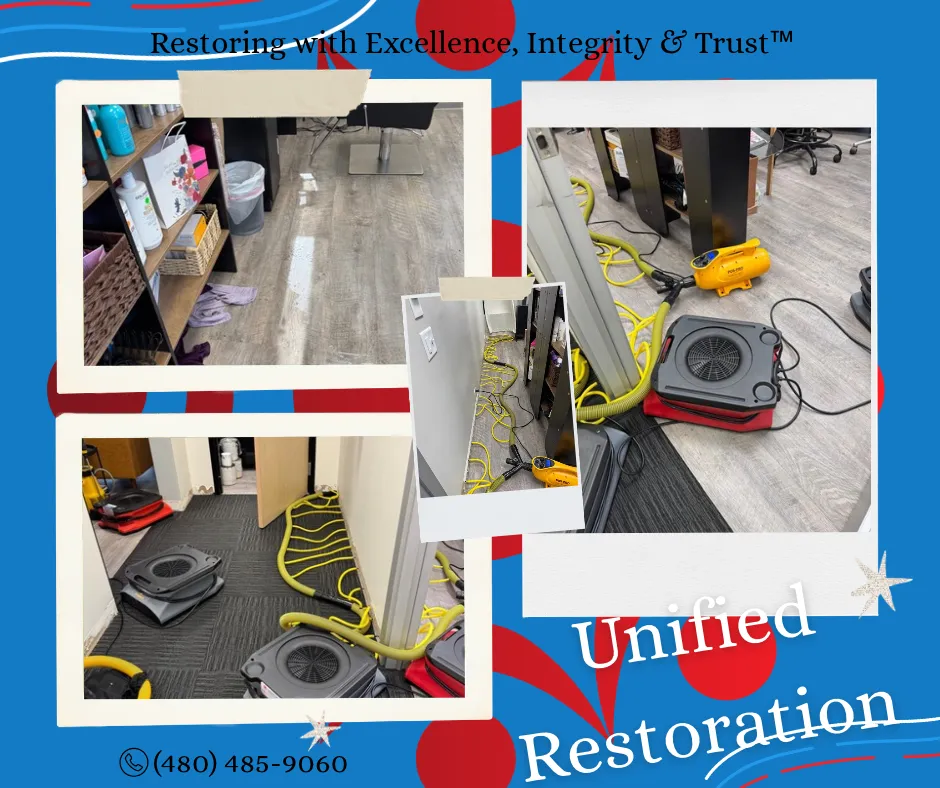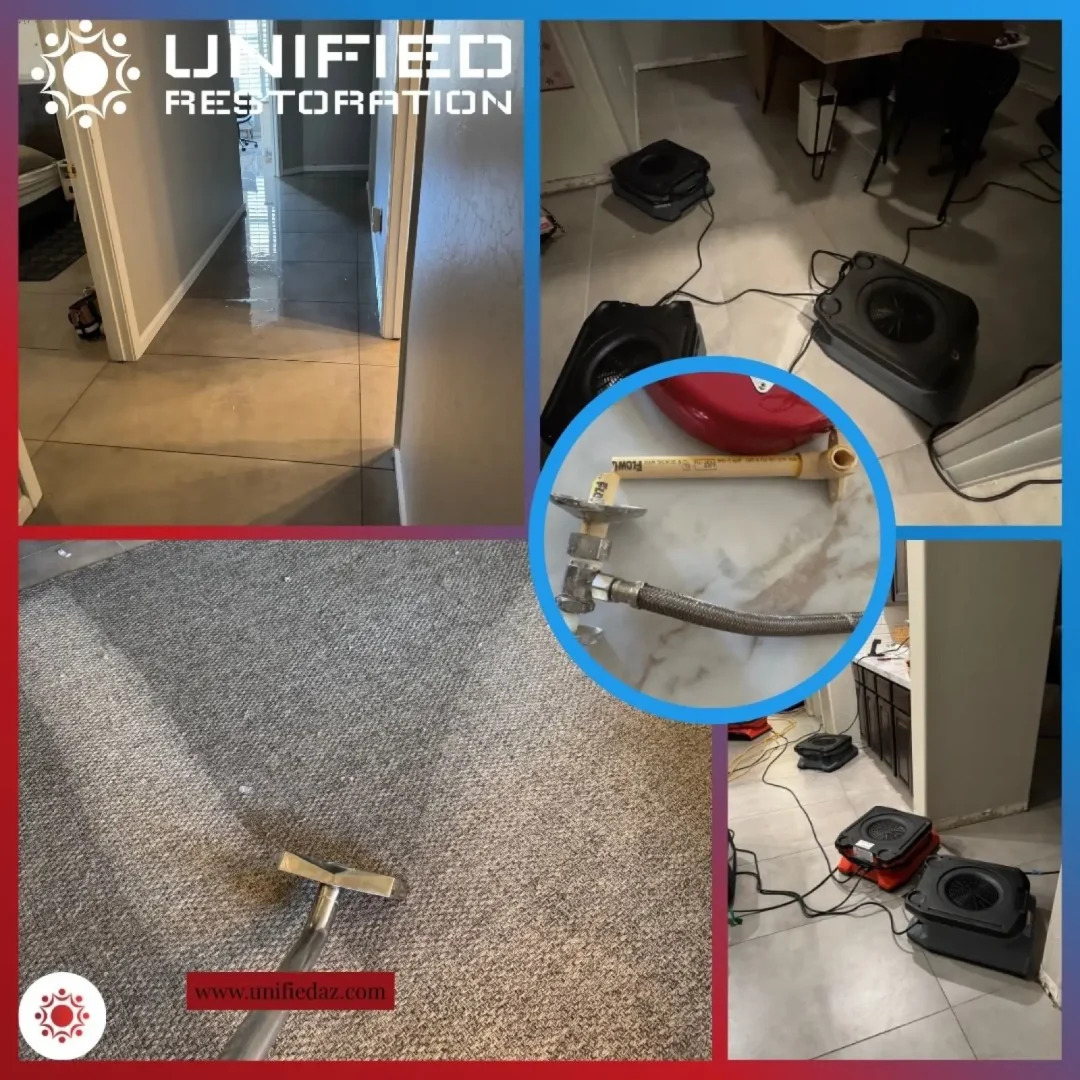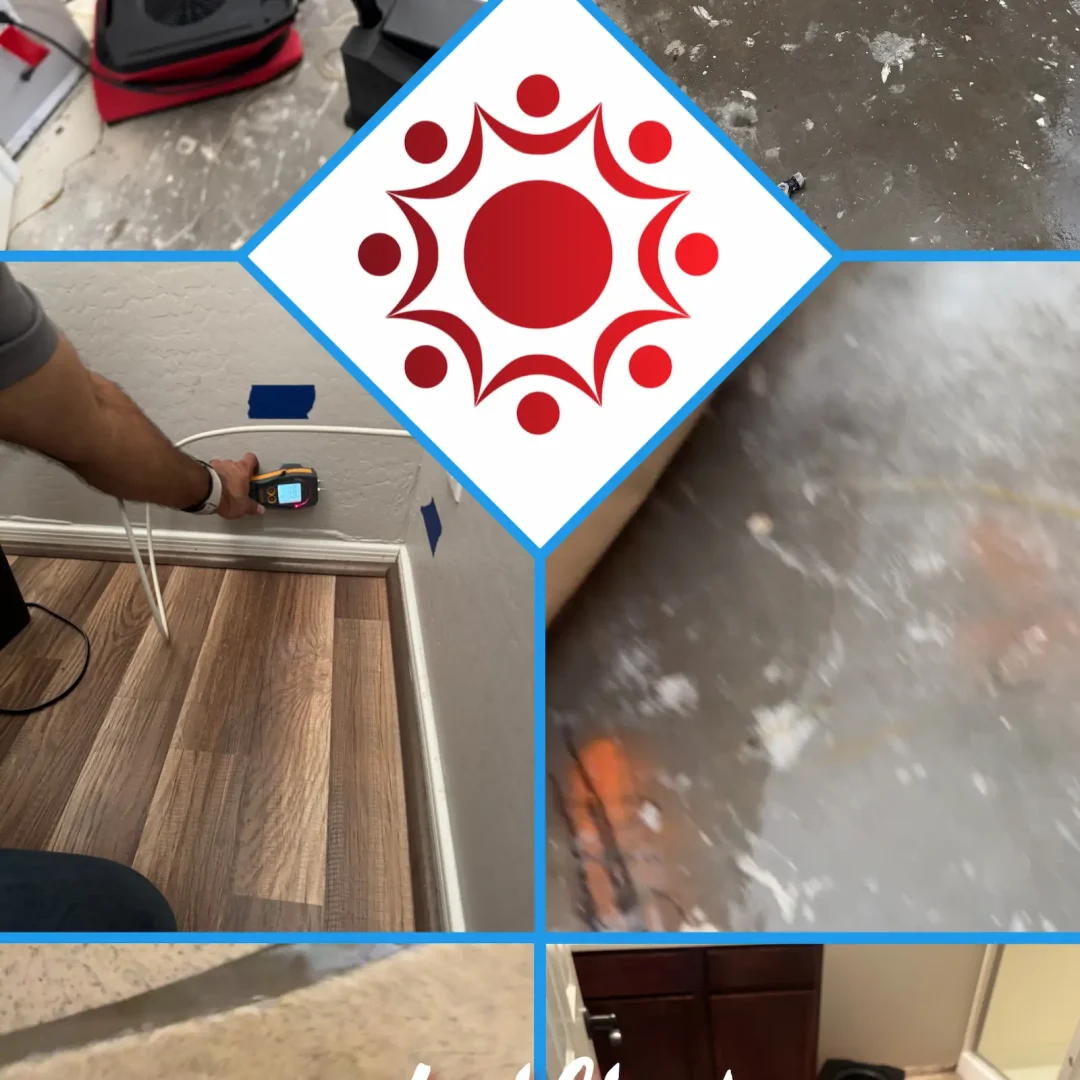

In August, a laundry room leak on the second floor of a Peoria home sent water through the entryway ceiling below. The homeowner already had a restoration company on site, but he wasn’t comfortable with how the job was going. So he called us to take over.
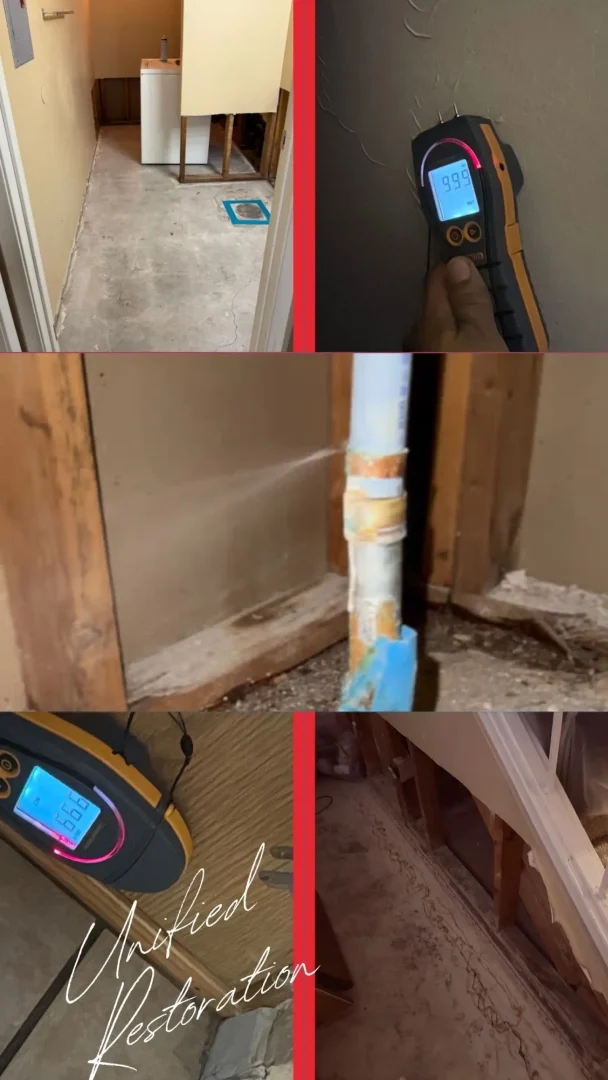
We traced the water to the cold supply line inside the laundry room wall. It had been leaking into the wall and floor of the laundry room, then down into the entryway walls and ceiling. Our thermal camera showed the cool, wet area spread across the entryway ceiling.
- Cause
- Failed cold supply line inside the laundry room wall
- Areas affected
- Second-floor laundry room, entryway walls and ceiling
- Drying time
- 4 days
- Insurance
- Homeowner chose to file a claim
What we did
- Built containment around the work areas
- Covered and protected the floors and stairs
- Removed wet drywall in the laundry room and all affected drywall in the entryway
- Removed all tile flooring and cement board in the laundry room
- Dried the structure with air movers and dehumidifiers for 4 days
- Handed the rebuild to our partner repair team
Choosing a different restoration company
Having one company at your house doesn’t mean you have to use them for the next problem. This homeowner already had a restoration company working on an earlier leak, and he wasn’t happy with them. When the laundry room leak showed up, he chose someone else. It’s his home and his claim, so that was his call to make.
On every job, we find the source, check where the water actually went and explain what we see before anything gets torn out. If you’re choosing a company after a leak, the Arizona Department of Insurance recommends confirming that any contractor is licensed and insured before you sign.
How a laundry room leak reaches the floor below
An upstairs laundry room is convenient, but it puts water lines right above your living space. The washer’s supply lines run inside the wall, and when one starts leaking, there’s nothing to stop the water. It soaks the drywall, gets under the tile and into the subfloor, and then finds its way down to the ceiling below.
That’s what happened here. By the time water showed up in the entryway ceiling, the laundry room floor and walls had been taking on water for a while. Fixing the stain on the ceiling would have missed most of the damage.
Why the tile and drywall had to come out
Water trapped under tile can’t dry. The tile and the cement board under it hold the moisture against the subfloor, so the only way to dry the subfloor properly is to take them up. We removed all the tile and cement board in the laundry room and opened up the wet laundry drywall to dry the wall cavity.
In the entryway, we removed all the affected drywall on the walls and ceiling. Before any of that, we built containment and covered the floors and stairs, so the dust and debris stayed in the work area and the rest of the house stayed clean.
With everything open, air movers and dehumidifiers dried the structure in 4 days. Our partner rebuild team then handled the repairs, so the homeowner didn’t have to find a contractor on his own. You can read more about how we handle water damage restoration from start to finish.
A laundry room leak rarely stays in the laundry room. If water shows up on a ceiling, the source is often one floor up.
The homeowner was very happy with our communication and how quickly and positively our crew worked, and he left us a good review. More of our local jobs are on our Peoria water damage page.
It’s your home, so you get to choose who works in it.