
The Water Damage Spot Most Mesa Homeowners Never Check(Until It’s Too Late)
When was the last time you pulled your refrigerator away from the wall? If you’re like most Mesa homeowners, the answer is probably never. Yet the space behind your fridge is one of the most common places we find serious hidden water damage behind the refrigerator — often months or even years old by the time anyone notices.
Why Behind the Refrigerator Is a Blind Spot
Your refrigerator is heavy, it’s rarely moved, and the wall behind it is completely out of sight. That combination makes it the perfect place for a slow leak to go undetected. A drip as small as one drop per minute from a water supply line can release gallons of water into your wall and flooring over a few months — quietly feeding mold and rotting drywall the entire time.
Watch: What’s Behind the Fridge?
This YouTube Short shows real damage found behind a seemingly clean fridge. It’s a reminder to stay vigilant and take action before the damage spreads.
What Causes Water Damage Behind the Refrigerator?
- Ice maker supply lines: The thin plastic or copper line feeding your ice maker is the number one culprit. Plastic lines become brittle with age, and Mesa’s hard water accelerates corrosion in copper fittings.
- Loose or worn connections: The fitting where the supply line meets the wall valve or the fridge can loosen over time, especially after the fridge is bumped or moved.
- Defrost drain overflow: A clogged defrost drain can cause water to pool under and behind the unit.
- Condensation buildup: Poor airflow behind the fridge traps humidity against the wall, which in Arizona’s sealed, air-conditioned homes can be enough to support mold growth on its own.
Warning Signs of Water Damage Behind the Refrigerator
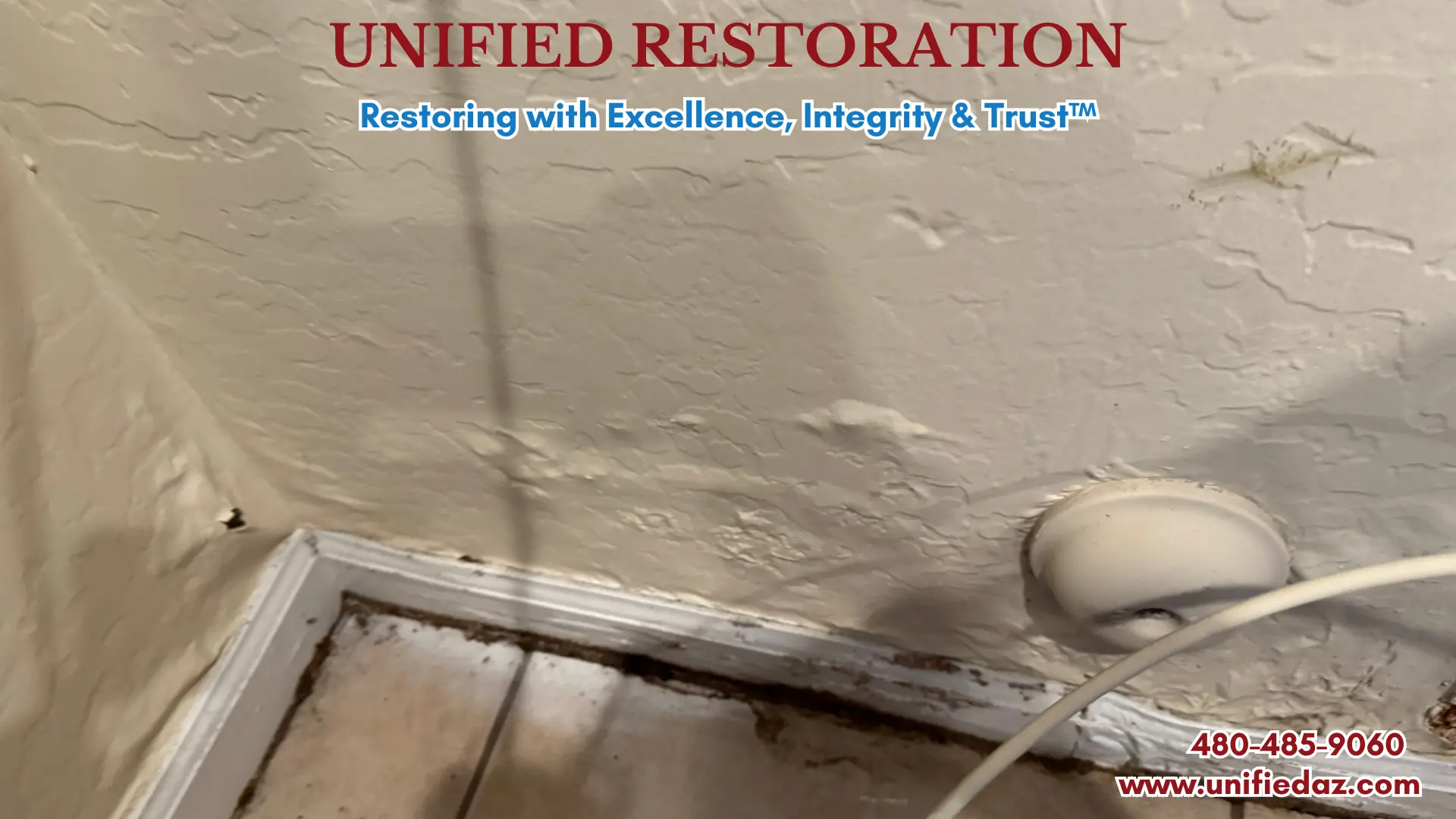
- Warped, buckled, or discolored flooring near the fridge
- A musty smell in the kitchen you can’t locate
- Bubbling or peeling paint on the wall beside the refrigerator
- Dark staining along the baseboard behind or next to the unit
- A refrigerator that suddenly sits unevenly
What to Do If You Find Water Damage Behind Your Fridge
Carefully pull the refrigerator forward
Walk it out slowly to avoid tearing the supply line. Two people is safest.
Shut off the water supply valve
The valve is usually behind the fridge or under the kitchen sink. Turn it clockwise until it stops.
Dry what you can see
Towel up standing water, but don’t assume surface drying solves the problem — moisture has almost certainly traveled into the wall and under the flooring.
Document everything
Take photos of the damage, the supply line, and any visible mold before anything is moved or cleaned. Your insurance adjuster will want them.
Call a professional for moisture testing
Only a moisture meter or thermal camera can tell you how far the water has actually traveled. Unified Restoration provides free assessments for Mesa homeowners.
How to Prevent Water Damage Behind the Refrigerator
- Pull your fridge out and inspect the wall, floor, and supply line every 6 months
- Replace plastic ice maker lines with braided stainless steel — they cost about $20 and last decades
- Leave at least 2 inches of clearance behind the unit for airflow
- Consider a leak detection sensor on the floor behind the fridge — smart models alert your phone the moment they sense moisture
- Check the supply valve for corrosion whenever you clean behind the unit
The Cost of Ignoring It
A braided supply line costs about $20. A leak sensor costs about $30. But a slow leak that runs for six months behind a refrigerator routinely produces $3,000 to $8,000 in drywall, flooring, and cabinet damage — and if mold has spread into the wall cavity, remediation can push the total well beyond that. Insurance may also deny claims for damage they classify as long-term neglect rather than sudden loss, which makes early detection worth far more than the cost of prevention.
Frequently Asked Questions
How often should I check behind my refrigerator for leaks?
Every six months is a good rhythm — many Mesa homeowners pair it with changing their HVAC filters at the start of summer and winter. If your fridge has an ice maker or water dispenser, don’t skip it.
Does homeowners insurance cover water damage behind a refrigerator?
Sudden failures — like a burst supply line — are typically covered. Slow leaks that went unnoticed for months are often classified as maintenance issues and may be denied. This is exactly why documentation and fast professional response matter.
Can mold behind a refrigerator make my family sick?
Yes. Mold in a wall cavity releases spores into your kitchen air, and symptoms like persistent allergies, coughing, or headaches that improve when you leave the house are common warning signs. Anyone with asthma or a compromised immune system is at higher risk.
Do I need to replace drywall that got wet behind the fridge?
It depends on how long it was wet. Drywall that dried within 24–48 hours can often be saved. Drywall that stayed damp longer, shows staining, or feels soft almost always needs to be cut out and replaced — moisture testing is the only way to know for sure.
Don’t Let a Hidden Leak Become a Major Repair
If you’ve found water damage behind the refrigerator — or it’s simply been years since anyone looked — Unified Restoration provides fast, professional moisture assessments for homeowners across Mesa, Chandler, Gilbert, and the greater Phoenix Metro area. We find the full extent of the damage, document everything for your insurance, and restore your kitchen properly.
Ready to Restore Your Home?
Get a free, no-pressure assessment from Valley’s trusted damage restoration team. We respond 24/7 and work with all insurance providers.
Trusted by Arizona Homeowners
Related Posts
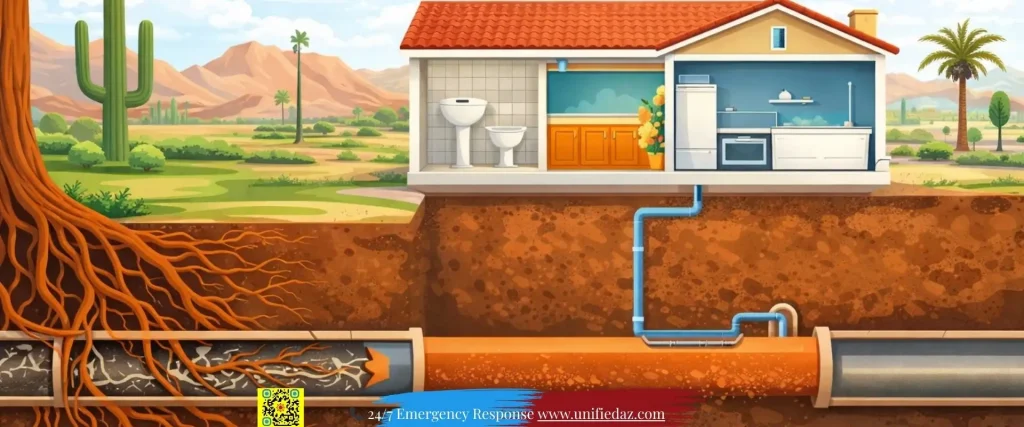
Tree Roots in Drain Pipe
Tree roots in your drain pipe happen when roots grow toward your underground pipes searching for water and nutrients. Here's how to spot the…
Read More →
Arizona Winter Visitors: Home & Trailer Check-In Guide for 2025
Every year, thousands of Arizona winter visitors arrive to find flooded homes, leaking trailers, or mold damage after months away. This checklist helps you…
Read More →
Toilet Tank Leak vs Toilet Bowl Backup – 2025 | Unified
Two bathroom water events can look identical — but knowing the difference between a toilet tank leak and a toilet bowl backup is critical.…
Read More →
Slab Leak Repairs: 7 Key Steps for Effective Solutions
Repairing a slab leak isn't a quick patch job — it requires expertise, the right tools, and careful planning. Here's a step-by-step breakdown of…
Read More →